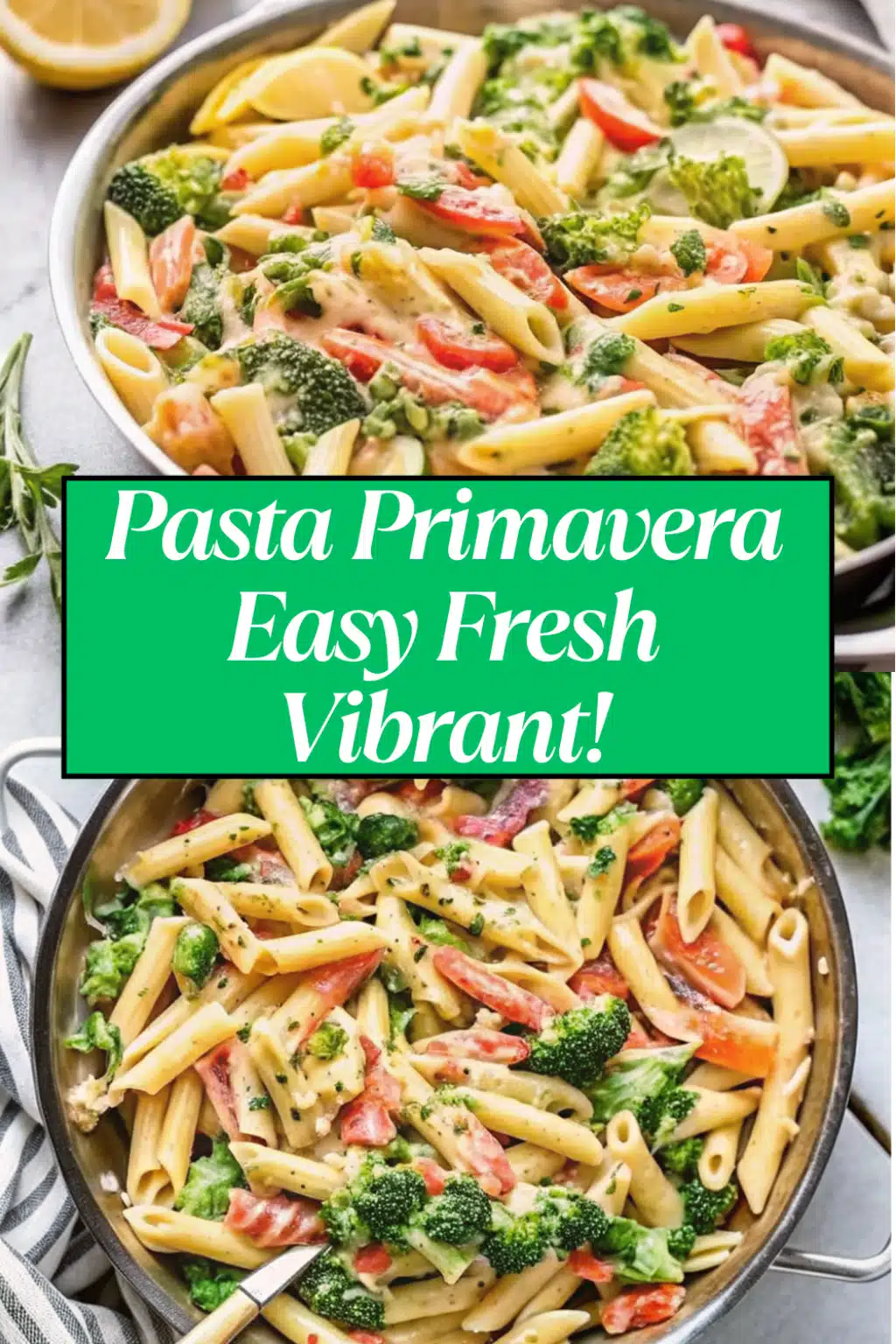
Pasta Primavera is the dish that reminds all three of us why spring is the most generous season of the whole year. The first Sunday in April when the farmers market fills up again with asparagus and snap peas and broccoli and the air smells different and the light comes through the kitchen window at a new angle entirely, that is the day one of us always makes this pasta. Usually Maria. She fills the biggest skillet she owns with olive oil and garlic and every beautiful vegetable she carried home and the whole apartment is transformed in under thirty minutes into something that smells exactly like a warm Italian spring afternoon.
Pasta Primavera is the kind of dinner that makes you wonder why you ever ordered takeout. A full pound of pasta tossed with tender-crisp asparagus, snap peas, broccoli florets, sweet carrots, and peas in a light and silky sauce of vegetable broth, lemon juice, fresh herbs, and Parmesan that coats every single piece of pasta in bright clean flavor. It is on the table in 45 minutes and it tastes like a celebration of everything good about the season. Come follow us on Pinterest where we share beautiful recipes like this one from our kitchen every single week.
Table of Contents
Why You Will Love This Pasta Primavera Recipe

This Pasta Primavera recipe is weeknight dinner at its very best. Twenty minutes of prep, twenty-five minutes of cooking, and you have a meal on the table that is bright, satisfying, genuinely nourishing, and beautiful to look at. The vegetables are cooked to tender-crisp perfection in extra virgin olive oil with garlic and red onion which gives them far more flavor than simply boiling or steaming ever could. The sauce comes together in the same pan in minutes, a light combination of vegetable broth, lemon juice, fresh herbs, and Parmesan that feels almost creamy without being heavy.
The optional splash of heavy cream at the end transforms the sauce into something a little richer and more indulgent without making the dish feel anything other than fresh and seasonal. This is a pasta that feels equally appropriate on a quiet Tuesday evening and at a weekend table set for guests. Our Margherita Pizza makes a wonderful simple Italian companion alongside this pasta for a full spring-inspired dinner that celebrates the very best of seasonal produce and effortless cooking.
Ingredients Needed for This Pasta Primavera Recipe
For the Pasta:
- 1 lb (450g) Pasta such as penne, farfalle, or fusilli
For the Vegetables:
- 1 cup Asparagus, cut into 1-inch pieces
- 1 cup Snap Peas, trimmed
- 1 cup Broccoli Florets, cut small
- ½ cup Fresh or Frozen Peas
- ½ cup Carrots, thinly sliced
- ¼ cup Red Onion, thinly sliced
For the Sauce:
- 2 tbsp Extra Virgin Olive Oil
- 2 cloves Garlic, minced
- ½ cup Low-Sodium Vegetable Broth
- ¼ cup Heavy Cream (optional, for extra richness)
- 2 tbsp Fresh Lemon Juice
- 2 tbsp Fresh Herbs, chopped such as parsley, basil, and chives
- ¼ cup Parmesan Cheese, freshly grated, plus more for serving
- Salt and Freshly Ground Black Pepper to taste
How to Make This Pasta Primavera Recipe
Bring a large pot of generously salted water to a rolling boil. Add the pasta and cook according to the package directions until al dente. The pasta should have a pleasant bite when you taste it and not be soft all the way through. Before draining, use a ladle or measuring cup to scoop out approximately 1 cup of the starchy pasta cooking water and set it aside. This pasta water is your secret weapon for adjusting the consistency of the sauce at the end. Drain the pasta and set aside.
While the pasta is cooking, heat the extra virgin olive oil in a large wide skillet over medium heat until it shimmers. Add the minced garlic and sliced red onion and sauté for 2 to 3 minutes, stirring frequently, until the garlic is fragrant and the onion has softened and become translucent. Do not let the garlic brown, cara mia. Browned garlic turns bitter and that bitterness will carry through the entire dish.
Add the asparagus pieces, snap peas, broccoli florets, and carrots to the skillet and toss everything together in the garlicky oil. Sauté for 5 to 7 minutes, tossing occasionally, until the vegetables are bright and vivid in color and just tender with a satisfying crunch still present when you bite into them. Add the peas in the final minute of cooking, which is all they need whether fresh or frozen. Season generously with salt and freshly ground black pepper.
Pour the vegetable broth into the skillet and bring to a gentle simmer. If using the heavy cream, stir it in now and allow everything to simmer together for 2 to 3 minutes until the sauce reduces slightly and comes together into a light coating consistency. Stir in the fresh lemon juice, chopped herbs, and grated Parmesan and stir until the cheese is fully melted into the sauce. Taste and adjust the seasoning with more salt, pepper, or lemon as needed.
Add the drained pasta directly to the skillet and toss everything together thoroughly until every piece of pasta is coated in the sauce and the vegetables are distributed evenly throughout. If the sauce feels too thick or the pasta seems dry, add splashes of the reserved pasta water a little at a time, tossing between each addition, until the consistency is silky and loose enough to coat the pasta beautifully. Serve immediately in warm bowls with extra Parmesan grated generously over the top and a few extra fresh herb leaves scattered across the surface.
How to Serve This Pasta Primavera Recipe
Serve this pasta immediately while it is at its most vibrant and the vegetables still have their beautiful color and their satisfying crunch. A final squeeze of fresh lemon juice just before serving brightens everything and makes the herbs and vegetables taste even more alive. A wedge of good crusty bread alongside for mopping up every last bit of the sauce is essential in our kitchen. For a complete spring dinner, our Lemon Pasta is a beautiful and equally bright companion dish that celebrates the season’s best flavors alongside this primavera.
How to Store This Pasta Primavera Recipe
Store leftovers in an airtight container in the refrigerator for up to 3 days. When reheating, add a splash of vegetable broth or water to the pasta and warm gently over low heat on the stovetop, tossing frequently to prevent sticking and to revive the sauce. The microwave also works well for reheating individual portions, again with a small splash of liquid to restore the creamy consistency. The vegetables will soften further during storage which some people actually prefer in leftover pasta. For the very best texture and flavor this dish is ideally served freshly made.
Tips to Make This Pasta Primavera Recipe
Always cook the pasta to al dente rather than soft. The pasta will continue to cook very slightly in the hot skillet when tossed with the sauce and vegetables so pulling it from the water while it still has a little bite ensures it arrives in the bowl at exactly the right texture. Use freshly grated Parmesan rather than pre-grated from a jar.
Freshly grated Parmesan melts into the sauce smoothly and gives a far richer and more complex flavor than the pre-grated variety which often contains anti-caking agents that prevent it from melting properly. Do not overcook the vegetables. Tender-crisp vegetables with color and crunch remaining are the heart of a great Pasta Primavera. Soft grey vegetables that have lost their color are a disappointment both visually and in flavor.
Helpful Notes for This Pasta Primavera Recipe
The starchy pasta water is one of the most useful and most often discarded ingredients in all of pasta cooking. The starch that the pasta releases into the water as it cooks acts as an emulsifier that helps the sauce cling to the pasta and creates that silky glossy finish you see in great restaurant pasta dishes. Always set some aside before draining and use it freely to adjust the sauce as you toss the pasta. Extra virgin olive oil is not interchangeable with light or pure olive oil in this recipe. The fruit-forward flavor of good extra virgin olive oil is a foundational flavor in the finished dish and it matters. Use the best quality you have available.
Variation of This Pasta Primavera Recipe
Maria makes a summer version of this dish using zucchini, cherry tomatoes, and fresh corn cut from the cob in place of the spring vegetables and it is one of the most satisfying and colorful pasta dishes we have ever eaten on a warm evening with all the windows open. Teresa added a handful of sun-dried tomatoes to the skillet alongside the vegetables one autumn and the concentrated sweet-savory depth they added to the sauce was extraordinary and completely changed the character of the dish in the most wonderful way.
For a heartier version, add a tin of drained and rinsed white cannellini beans to the vegetables for a pasta that is more filling and adds a lovely creamy texture alongside all those crisp vegetables. Our Sausage and Egg Casserole makes a wonderfully hearty and satisfying companion for a complete spring brunch table alongside this vibrant pasta.
FAQs About This Pasta Primavera Recipe
Can I make this Pasta Primavera vegan?
Absolutely. Simply omit the Parmesan cheese and the heavy cream and use a good quality plant-based Parmesan alternative if you would like the cheesy flavor. A tablespoon of nutritional yeast stirred into the sauce adds a wonderful savory depth that works beautifully in place of the Parmesan. Make sure your vegetable broth is also fully vegan. The dish is just as vibrant, satisfying, and delicious in its vegan form.
What other vegetables work well in this recipe?
Pasta Primavera is one of the most flexible and forgiving recipes in our kitchen. Zucchini, yellow squash, bell peppers, mushrooms, corn, cherry tomatoes, green beans, and leeks all work wonderfully. The only guideline worth following is to add harder denser vegetables like carrots and broccoli to the pan first and more delicate vegetables like peas and cherry tomatoes in the final moments so everything finishes cooking at the same perfect tender-crisp point.
How do I prevent the pasta from sticking together after draining?
Toss the drained pasta immediately with a very small drizzle of olive oil if you are not adding it to the skillet straight away. More importantly, add the drained pasta to the skillet with the sauce as quickly as possible after draining. Pasta sitting in a colander at room temperature will stick together as it cools and dries out. The sauce and the residual heat of the skillet keep the pasta moving and perfectly coated.
Conclusion
This Pasta Primavera is everything we believe a great weeknight dinner should be. Fast enough for a busy Tuesday, beautiful enough for a Saturday table, and deeply satisfying in the way that only a simple dish made with genuinely good ingredients and a little care can ever truly be. We hope it brings as much joy and color to your kitchen as it has always brought to ours. Make it, share it, and come back to tell us all about it. With all our love, Maria, Lucia, and Teresa.
Print
Pasta Primavera The Most Vibrant and Fresh Spring Pasta You Will Ever Make
- Total Time: 45 minutes
- Yield: 4 servings 1x
- Diet: Vegetarian
Description
A vibrant and satisfying Pasta Primavera loaded with fresh spring vegetables including asparagus, snap peas, broccoli, carrots, and peas tossed in a light lemon herb Parmesan sauce. On the table in 45 minutes and bursting with the best flavors of the season.
Ingredients
1 lb Pasta penne farfalle or fusilli
1 cup Asparagus cut into 1-inch pieces
1 cup Snap Peas trimmed
1 cup Broccoli Florets cut small
1/2 cup Fresh or Frozen Peas
1/2 cup Carrots thinly sliced
1/4 cup Red Onion thinly sliced
2 tbsp Extra Virgin Olive Oil
2 cloves Garlic minced
1/2 cup Low-Sodium Vegetable Broth
1/4 cup Heavy Cream optional
2 tbsp Fresh Lemon Juice
2 tbsp Fresh Herbs chopped parsley basil and chives
1/4 cup Parmesan Cheese freshly grated plus more for serving
Salt and Freshly Ground Black Pepper to taste
Instructions
1. Bring a large pot of generously salted water to a boil. Cook pasta until al dente according to package directions.
2. Reserve 1 cup pasta cooking water before draining. Drain pasta and set aside.
3. Heat olive oil in a large skillet over medium heat. Add garlic and red onion and sauté 2 to 3 minutes until fragrant and softened.
4. Add asparagus, snap peas, broccoli, and carrots. Sauté 5 to 7 minutes until tender-crisp.
5. Add peas in the final minute. Season with salt and pepper.
6. Pour in vegetable broth and bring to a simmer. Stir in heavy cream if using and simmer 2 to 3 minutes.
7. Stir in lemon juice, fresh herbs, and Parmesan until cheese is melted into the sauce.
8. Add drained pasta to the skillet and toss to combine.
9. Add reserved pasta water a splash at a time until sauce is silky and coats the pasta.
10. Serve immediately with extra Parmesan and fresh herbs on top.
Notes
Cook pasta to al dente as it continues cooking slightly in the hot sauce.
Use freshly grated Parmesan for the best melting and flavor.
Do not overcook vegetables. Tender-crisp with color remaining is the goal.
Reserved pasta water is essential for adjusting sauce consistency.
For vegan version omit cream and Parmesan and substitute plant-based alternatives.
- Prep Time: 20 minutes
- Cook Time: 25 minutes
- Category: Main Course
- Method: Stovetop
- Cuisine: Italian
Nutrition
- Serving Size: 1 serving
- Calories: 450
- Sugar: 6g
- Sodium: 380mg
- Fat: 14g
- Saturated Fat: 5g
- Unsaturated Fat: 8g
- Trans Fat: 0g
- Carbohydrates: 65g
- Fiber: 6g
- Protein: 16g
- Cholesterol: 20mg
Keywords: pasta primavera, spring vegetable pasta, easy pasta recipe, lemon herb pasta

- Apple Cider Donut Cake Recipe Easy Layer Brown Butter Spice - September 29, 2026
- Apple Cider Donut Cake The Most Easy Moist Snack Cake Reduced Apple Cider Sour Cream Butter Brown Sugar Cream Cheese Frosting Fall - September 28, 2026
- Apple Cider Cake The Most Easy Moist Reduced Apple Cider Brown Sugar Sour Cream Butter Cinnamon Spice Individual Fall Celebration Cake - September 28, 2026