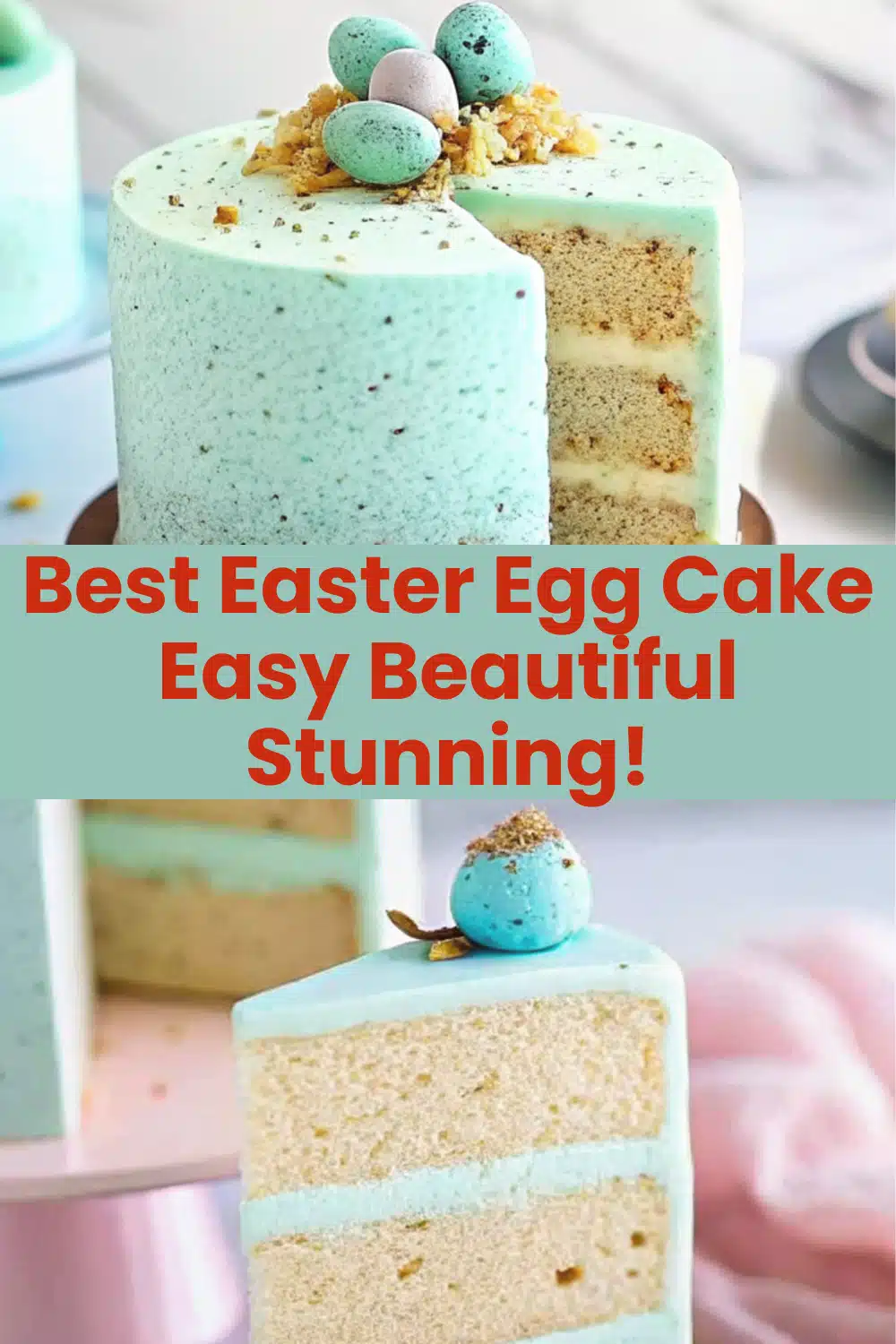
Easter Egg Cake is the cake that Teresa bakes every single year without fail the moment Easter approaches and the small chocolate eggs appear in the shops. She makes three layers of the most wonderfully moist vanilla cake, stacks them with buttercream and a sprinkling of toasted coconut between each layer, and then covers the whole thing in the most beautiful soft robin egg blue frosting that she achieves by mixing turquoise food coloring into her pale yellow butter frosting until it turns exactly the right shade. The cocoa and vanilla splatter she flicks across the surface with a pastry brush gives the cake that speckled egg appearance that makes everyone who sees it stop and say oh.
Easter Egg Cake is one of the most visually striking and completely achievable celebration cakes we have ever made together in this kitchen. Three moist and tender vanilla sponge layers filled and frosted in pale robin egg blue buttercream, decorated with a cocoa vanilla splatter technique that creates the most beautiful speckled effect across the entire surface, crowned with a toasted coconut nest cradling a small collection of chocolate eggs on top. It looks like it came from a very talented bakery and it is genuinely not difficult to make. Come follow us on Pinterest where we share beautiful and celebratory recipes like this one from our kitchen every single week.
Table of Contents
Why You Will Love This Easter Egg Cake Recipe

This Easter Egg Cake recipe is the celebration cake that impresses absolutely everyone at the table before they have even tasted it because the visual presentation is so completely charming and beautiful. The robin egg blue buttercream is the color that defines this cake and it is achieved simply and reliably by beating turquoise food coloring into a pale yellow butter-based American buttercream. The yellow of the butter and the turquoise of the dye combine naturally to produce exactly the soft and beautiful robin egg blue that makes this cake so distinctive.
The cocoa splatter technique sounds complicated but takes under five minutes to master on a piece of scrap paper before applying to the cake. A small amount of Dutch process cocoa mixed with vanilla extract into a thin slurry, a clean pastry brush dipped briefly and then flicked with a finger toward the cake surface, creates the most beautiful and organic speckled pattern across the blue frosting that makes every individual spatter look intentional and artful.
The cake itself is straightforwardly wonderful, moist and vanilla-forward with a tender crumb that comes from the sour cream in the batter. Our Italian Lemon Cream Cake makes a beautiful bright and elegant companion alongside this Easter cake for a complete and stunning spring celebration dessert table.
Ingredients Needed for This Easter Egg Cake Recipe
For the Vanilla Cake:
- 2 cups All-Purpose Flour, measured correctly by spooning into the cup and leveling
- 1 tsp Baking Soda
- 1½ tsp Baking Powder
- ½ tsp Salt
- 1½ cups Granulated Sugar
- 1 cup Whole Milk, room temperature
- ½ cup Sour Cream, room temperature
- 2 tsp Vanilla Extract
- 3 large Eggs, room temperature
- ½ cup Unsalted Butter, very soft or melted and cooled
For the Robin Egg Blue Buttercream:
- 1½ cups Unsalted Butter, softened
- Pinch of Salt
- 4 to 5 cups Powdered Sugar, sifted
- Turquoise Blue Food Coloring (gel preferred)
For the Cocoa Splatter:
- 1 tbsp Dutch Process Cocoa Powder
- 1 tsp Vanilla Extract
For Decoration:
- ½ cup Toasted Coconut Flakes (optional but recommended)
- 1 cup Small Chocolate Eggs such as Cadbury Mini Eggs or pastel Hershey Mini Eggs
How to Make This Easter Egg Cake Recipe
Preheat the oven to 350°F. Butter and flour three 6-inch round cake pans thoroughly, making sure to coat the sides and bottom completely. Line the bottoms with rounds of parchment paper for insurance against sticking.
In a large bowl, sift together the flour, baking soda, baking powder, salt, and granulated sugar. Whisk together until fully combined and set aside. In a separate medium bowl, whisk together the room-temperature whole milk, sour cream, vanilla extract, eggs, and softened or melted butter until smooth. Do not panic if the mixture looks like it has small clumps of butter in it, cara mia. Everything comes together beautifully once the wet ingredients meet the dry. Pour the wet mixture into the large bowl of dry ingredients and mix gently until just combined with no visible dry streaks remaining. Do not overmix. Divide the batter evenly among the three prepared pans.
Bake for 20 to 25 minutes until a toothpick inserted into the center of each cake comes out clean and the tops are very lightly golden. Allow the cakes to cool in the pans for 10 minutes before turning out onto a wire rack to cool completely. The cakes must be completely cold before frosting.
For the robin egg blue buttercream, beat the softened butter and pinch of salt together in a stand mixer or large bowl with an electric mixer on high speed until pale and fluffy, about 3 to 4 minutes. Sift the powdered sugar in batches, mixing on low speed after each addition until combined, then increasing to medium-high speed to beat smooth and fluffy before adding the next batch.
Once all the sugar is incorporated and the frosting is light and glossy, add the turquoise blue gel food coloring one drop at a time, beating between each addition, until the frosting reaches a beautiful soft robin egg blue. The natural yellow of the butter combines with the turquoise to produce this color naturally.
To assemble, level each cake layer if needed with a sharp serrated knife. Place the first layer on a cake board or stand and spread a generous and even layer of blue buttercream over the top. If using toasted coconut, sprinkle a small amount over the buttercream before adding the next layer. Repeat with the second layer and then place the third layer on top.
Cover the entire cake in a thin crumb coat of buttercream and refrigerate for 15 minutes to set. Apply the final outer coat of buttercream and smooth the top and sides with an offset spatula and a bench scraper, pulling the corner of the spatula in gently while slowly rotating the cake for a clean smooth finish.
For the cocoa splatter, mix the cocoa powder and vanilla extract together in a small bowl until a thin fluid slurry forms. Practice on a sheet of paper first. Dip a clean pastry brush into the slurry, hold it 6 to 10 inches from the cake, and run your finger firmly across the bristles to send a spray of fine droplets onto the cake surface. Vary the angle and distance for a natural and organic looking pattern all over the cake. To decorate the top, pipe a ring of buttercream around the outer edge of the cake top, gently press toasted coconut flakes into the ring to create a nest shape, and nestle the chocolate eggs inside the nest.
How to Serve This Easter Egg Cake Recipe
Serve this cake at room temperature so the buttercream is soft and creamy and the vanilla sponge is at its most tender and moist. Slice with a sharp knife wiped clean between cuts for the cleanest and most beautiful presentation.
Remove the cake from the refrigerator at least 30 minutes before serving. Place on a beautiful cake stand surrounded by a few extra chocolate eggs and a scattering of fresh spring flowers around the base for a centerpiece that is as beautiful as the cake itself. Our Easter Cookies make the most charming and festive companion alongside this cake for a complete and stunning Easter dessert table.
How to Store This Easter Egg Cake Recipe
Store the frosted cake covered in the refrigerator for up to 4 days. Bring to room temperature for at least 30 minutes before serving. Individual slices can be stored in an airtight container in the refrigerator for up to 4 days.
The unfrosted cake layers can be wrapped tightly in plastic wrap and frozen for up to 2 months. Thaw overnight in the refrigerator before frosting. The assembled and frosted cake can also be frozen without the coconut nest and chocolate egg decoration for up to 1 month. Wrap the whole cake in plastic wrap and then foil and thaw overnight in the refrigerator. Add the coconut nest and eggs just before serving.
Tips to Make This Easter Egg Cake Recipe
Always measure flour by spooning it into the measuring cup and leveling off with the back of a knife rather than scooping the cup directly into the flour bag. Scooping packs the flour and results in significantly more flour than the recipe needs, which produces a dense and dry cake rather than the moist and tender crumb this recipe delivers. A kitchen scale weighing the flour in grams is the most accurate method of all.
Practice the cocoa splatter technique on a sheet of scrap paper before applying it to the frosted cake. The key variables are the consistency of the cocoa slurry, the amount of liquid on the brush at the time of flicking, and the distance between the brush and the cake surface. Too much liquid on the brush produces large wet drops. Too little produces nothing. The ideal consistency produces a fine spray of small distinct specks that dry quickly on the buttercream surface.
Helpful Notes for This Easter Egg Cake Recipe
Cake strips, which are dampened fabric strips wrapped around the outside of the cake pans during baking, are the professional tool that produces perfectly flat layer tops without any dome in the center. A domed cake layer means more leveling and more wasted cake. If you do not have cake strips you can make a functional version by soaking long strips of paper towels in water, wrapping them in aluminum foil, and securing them around the outside of each pan with a pin before baking. The strips insulate the outside of the pan and allow the entire layer to rise at the same rate rather than the edges setting and doming the center upward.
Variation of This Easter Egg Cake Recipe
Maria made a version with a generous sprinkling of toasted sweetened coconut between every layer which added the most wonderful chewy and slightly nutty texture to each bite of cake alongside the smooth buttercream. Teresa tried using a pale lavender food coloring instead of the turquoise blue for a soft purple frosting that was equally beautiful and spring-like against the cocoa splatter and brown chocolate eggs.
For cupcakes, divide the batter among 18 to 20 lined muffin cups filling each two thirds full and bake at 350°F for 18 to 20 minutes. Frost each cupcake with blue buttercream and roll the outer edge in toasted coconut to create a nest effect, then nestle two or three chocolate eggs on top of each for the most adorable individual Easter treats. Our Easter Swirl Pie makes a wonderfully colorful and festive companion alongside this cake for a complete and stunning Easter celebration dessert spread.
FAQs About This Easter Egg Cake Recipe
How do I achieve the exact robin egg blue color for the frosting?
Start with a pale yellow buttercream made with real butter rather than white vegetable shortening. Add turquoise gel food coloring one small drop at a time, beating fully between each addition, until the frosting reaches a beautiful soft blue-green that resembles a robin egg. The yellow of the butter and the turquoise of the dye naturally combine to create this distinctive color. Adding too much coloring too quickly produces a much deeper and less subtle shade. Gel food coloring produces significantly more vivid results than liquid food coloring and is strongly recommended.
Can I make this cake in 8-inch or 9-inch pans?
Yes. For 8-inch pans, double the entire recipe. For 9-inch pans, triple the entire recipe. The baking time will need to be adjusted accordingly. Begin checking for doneness at 25 minutes for 8-inch layers and 30 minutes for 9-inch layers and continue baking until a toothpick inserted in the center comes out clean.
Where can I find the blue chocolate eggs for the decoration?
Cadbury Mini Eggs are the most widely available chocolate eggs with a blue shell and are sold in most major supermarkets around Easter. Hershey’s Mini Eggs come in bright pastel colors including blue and are another widely available option. Both varieties work beautifully for the nest decoration.
Conclusion
This Easter Egg Cake is the centerpiece that makes every Easter table feel like a genuinely special and beautiful celebration and it does so with a moist and delicious vanilla cake that everyone reaches for seconds of long after they have admired the decoration. We hope it brings the same joy and the same collective oh from everyone who sees it to your Easter table that it has always brought to ours. Make it, share it, and come back to tell us all about it. With all our love, Maria, Lucia, and Teresa
Print
Easter Egg Cake The Most Beautiful and Moist Vanilla Cake You Will Ever Bake
- Total Time: 1 hour 30 minutes
- Yield: 12 servings 1x
- Diet: Vegetarian
Description
The most beautiful Easter Egg Cake made with three moist vanilla sponge layers frosted in soft robin egg blue buttercream decorated with a cocoa splatter technique and crowned with a toasted coconut nest filled with chocolate eggs. A stunning and completely achievable Easter celebration cake.
Ingredients
2 cups All-Purpose Flour spooned and leveled
1 tsp Baking Soda
1 1/2 tsp Baking Powder
1/2 tsp Salt
1 1/2 cups Granulated Sugar
1 cup Whole Milk room temperature
1/2 cup Sour Cream room temperature
2 tsp Vanilla Extract
3 large Eggs room temperature
1/2 cup Unsalted Butter very soft or melted and cooled
1 1/2 cups Unsalted Butter softened for buttercream
Pinch of Salt for buttercream
4 to 5 cups Powdered Sugar sifted
Turquoise Blue Gel Food Coloring
1 tbsp Dutch Process Cocoa Powder for splatter
1 tsp Vanilla Extract for splatter
1/2 cup Toasted Coconut Flakes optional
1 cup Small Chocolate Eggs for decoration
Instructions
1. Preheat oven to 350°F. Butter flour and line three 6-inch cake pans with parchment.
2. Sift flour, baking soda, baking powder, salt, and sugar in a large bowl. Whisk to combine.
3. Whisk milk, sour cream, vanilla, eggs, and butter together in a separate bowl until smooth.
4. Pour wet ingredients into dry and mix until just combined. Do not overmix.
5. Divide batter evenly among three prepared pans.
6. Bake 20 to 25 minutes until a toothpick comes out clean. Cool 10 minutes in pans then transfer to wire rack.
7. Beat softened butter and salt for buttercream on high speed 3 to 4 minutes until pale and fluffy.
8. Sift powdered sugar in batches mixing until smooth and fluffy.
9. Add turquoise gel food coloring one drop at a time beating until robin egg blue is achieved.
10. Level cake layers if needed. Stack with buttercream and optional toasted coconut between each layer.
11. Apply crumb coat and refrigerate 15 minutes. Apply final buttercream coat and smooth.
12. Mix cocoa powder and vanilla into a thin slurry. Practice on paper then flick onto cake with a brush.
13. Pipe a ring of buttercream on top, press toasted coconut to form a nest, and place chocolate eggs inside.
Notes
Measure flour by spooning into the cup and leveling. Never scoop directly into the bag.
All wet ingredients must be at room temperature for the best cake texture.
Practice cocoa splatter technique on paper before applying to the cake.
The yellow butter and turquoise dye combine naturally to produce robin egg blue.
Store frosted cake covered in the refrigerator for up to 4 days.
- Prep Time: 45 minutes
- Cook Time: 25 minutes
- Category: Dessert, Cake
- Method: Baking
- Cuisine: American
Nutrition
- Serving Size: 1 slice
- Calories: 520
- Sugar: 52g
- Sodium: 180mg
- Fat: 26g
- Saturated Fat: 16g
- Unsaturated Fat: 9g
- Trans Fat: 0g
- Carbohydrates: 68g
- Fiber: 0g
- Protein: 5g
- Cholesterol: 110mg
Keywords: easter egg cake, robin egg blue cake, easter cake recipe, moist vanilla easter cake

- Apple Cider Donut Cake Recipe Easy Layer Brown Butter Spice - September 29, 2026
- Apple Cider Donut Cake The Most Easy Moist Snack Cake Reduced Apple Cider Sour Cream Butter Brown Sugar Cream Cheese Frosting Fall - September 28, 2026
- Apple Cider Cake The Most Easy Moist Reduced Apple Cider Brown Sugar Sour Cream Butter Cinnamon Spice Individual Fall Celebration Cake - September 28, 2026